

Simple But Not Easy
A Piece of Advice, Plus Some Meta-Substacking and Personal Updates

Today, I come to you with an easy-to-state life lesson, which made it’s first appearance on this here blog-like thing in a footnote to a post about Inner Rings:
Don’t confuse complexity and difficulty. Often things are simple but not easy.
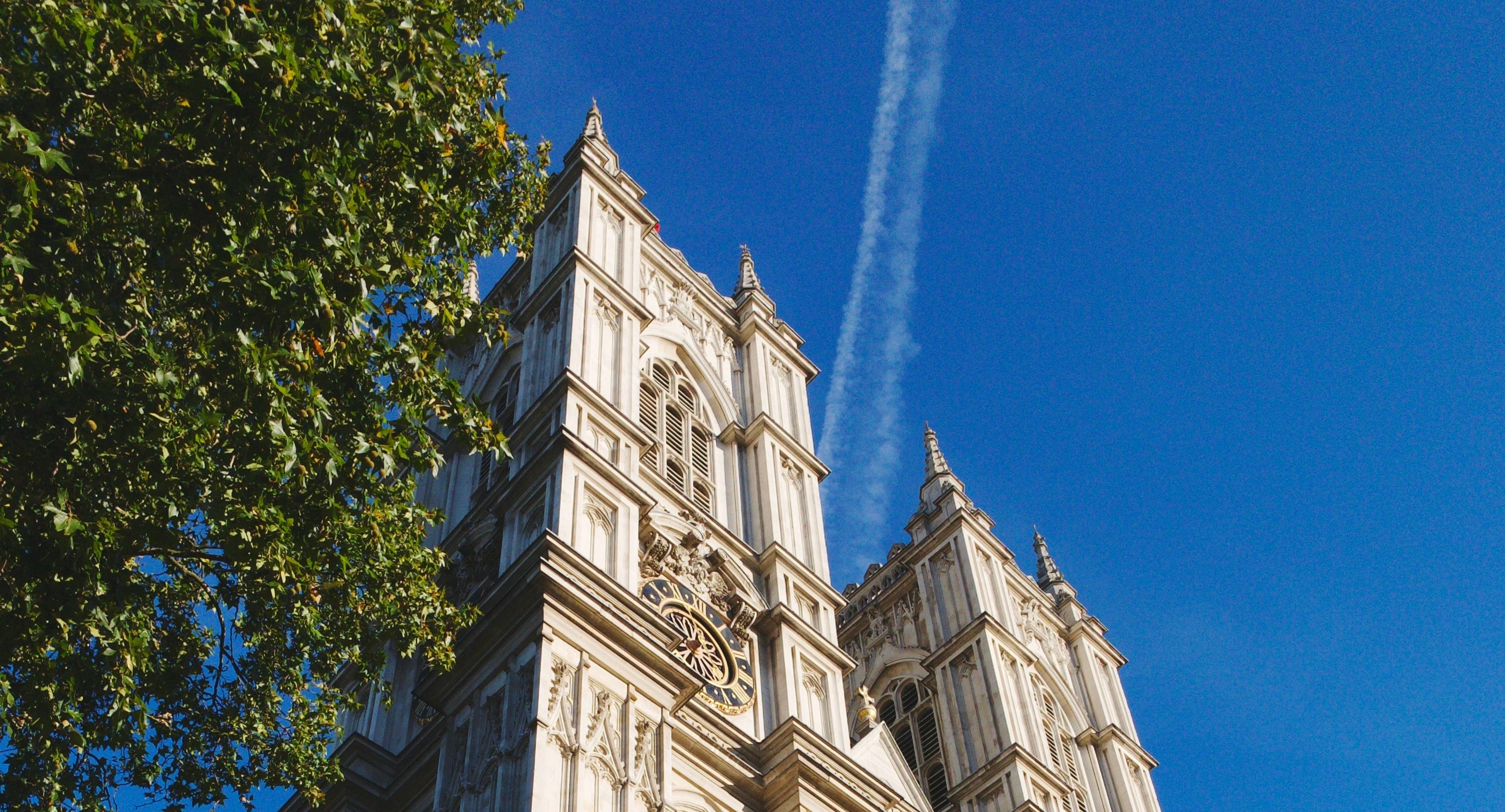
My church just finished a sermon series on the Ten Commandments. It’s been fantastic. One striking thing about the Decalogue is its simplicity. It’s generally not a complicated question whether worshipping that created thing was idolatry, whether that untruth you knowingly asserted was a lie, whether having sex with that person who wasn’t your spouse was adultery, whether taking that thing that wasn’t yours was theft.
Not everything about the Ten Commandments is obvious—for example, understanding what honoring your parents requires can sometimes be difficult to discern—but holy cow a lot of it sure is obvious.
Now, actually doing what God requires often feels impossible. It’s just so hard. It’s hard to be more devoted to God than any created good. It’s hard to not lie when the deceit seems like a net win. It’s hard, which is not the same thing as being complicated.
That life can be simple but hard is true outside of these moral spaces as well. My students struggle, for example, with sustained attention on a challenging piece of philosophy. There are loads of things you have to do to make such attention possible, and they’re just what you’d expect. Turn off your phone. Close your computer. Find a space where you can minimize distractions. Set a timer. Push yourself a little past where you’re comfortable. Ignore the little voice that says, “You’ll be able to concentrate if you just [check your social media, take a break, …],” since that’s why you set the timer.
This is not complicated. It’s just hard.
Difficulty is not the same thing as complexity.
The confusion of difficulty and complexity is alluring. When a task is absurdly complicated, it’s hard to fault people for failing to accomplish it. No one, for example, has cracked the puzzle of Goldbach’s Conjecture. It’s a difficult and maybe even impossible question whether Goldbach’s Conjecture is true, and that’s in large part because it’s so complicated. The complexity makes the difficulty easy to explain why we haven’t proved it one way or another, and likewise makes it hard to blame folks for having failed to find such a proof.
Complexity helps us explain failure without appeal to our intrinsic attributes, moral and otherwise. Complexity allows us to deflect the explanation from things about ourselves that, perhaps, we might be able to control, to things about the task that we cannot control.
In this way, complexity helps us avoid responsibility when we fail.
This sort of avoidance mollifies our egos. But it also keeps us stuck.
To do what is worth doing, we have to be willing to do what is hard. These are things are generally fairly simple. They are simple but not easy. Inevitably, this means we will sometimes—often? almost always?—fail. Gratefully, Christ loves us whether we’re a success or a failure.
So go try something hard. And when you fail, pick yourself up and try again.
Some Meta-Substacking & Personal Updates
The Fall term here at ol’ Biola U kicked off a few weeks ago. My son is well-entrenched in his sophomore year of high school, and my wife (a teacher) and daughter (an eighth-grader) are both back at it as well. Collectively, we have a million things going on, but most of them are well worth doing and things we very much enjoy. A bit more on that in a moment.
I’ve been asked a few times what I’m doing here on Substack, whether there is a theme, or even a constellation of themes. The answer to the theme question is straightforward: yes, there is a theme, and there are subsidiary themes within the one primary theme. Here’s a sort of mission statement for what I’m doing here:
Pancake Victim Speaks explores the development of and paths beyond the Accidental War on Humanity—a largely hidden historical current rooted in metaphysical and epistemological commitments grown up through a series of intellectual and cultural changes that make us unable to whole-heartedly believe the truth about ourselves and, therefore, about the good life.
Some posts are explicitly on the Accidental War. But the explorations of the relationship between heart and mind and of empathy, hope, and emotions are countering pressures that have built up through the Accidental War. The posts on disenchantment and re-enchantment—usually presented using C. S. Lewis’s ideas on “transposition”—as well as the post on testimony (which will soon have siblings) are hunting for a path beyond the Accidental War. Ultimately, I think the path beyond the Accidental War will involve awakening to God’s presence, but that for that reality to be embraced whole-heartedly, we need a compelling presentation of the cognitive apparatus necessary to sustain that whole-hearted embrace. This sort of presentation must be theoretical, but not merely theoretical. And so on occasion I dip into the world of fiction and music.
But occasionally, I just write about something else, something that was just on my mind or about which I found myself believing I had something useful to say. This is one of those days. Today, you just get a simple piece of hard-won advice. Plus this meta-Substacking.
Others have asked not about what I’m up to here, but how they can support what I’m up to. First of all, I have, and continue to be, grateful for all the support of those of you who have subscribed to Pancake Victim Speaks. It’s an honor to have you folks engage with my writing. There are also a few methods of support beyond that which are particularly impactful:
First, share posts you like, and tell you friends about Pancake Victim Speaks. Spreading the word is huge.
Upgrade to a paid subscription. This is a massive help as I invest in this sort of thing. Substack does take a cut, of course, but paid subscriptions really do make a difference.
Make a donation through my church, Redeemer OC, to support my work, including my work here. Your gift is fully tax deductible, and 100% of what you give will make it to me, either to defray costs associated with what I’m doing (books, travel, equipment) or as pay for the work itself. If you make a donation, be sure to indicate in the notes field (which you’ll see only after you choose an amount and click “continue to give…”) that your gift is destined for me or for Redeemer’s Scholar in Residence (also me LOL).1
By the way, if you can’t afford a paid subscription or a donation, but are curious to read something in the paywalled archive, please do let me know. I’m happy to comp access behind the paywall, no questions asked.
Lastly, I’d be grateful if you would pray for the work I’m doing here, and for me as I work. I long to do work that is a manifestation of the love of neighbor that emerges from the love of God, and that’s a challenging mindset to maintain when you’re trying to build an audience on the ol’ internet.
If you’re interested, which some of ya’ll have indicated you are, here are some of the work-related things I’ve got going on outside of Substack-land:
I’m teaching five classes this Fall, two for freshmen, one for seniors, and two different early-career graduate-level courses.
I’ll be doing a couple Biola chapels this year, one in a few weeks and the other sometime in the Spring. Both are as yet unwritten. I’m not worried. Yet 😬.
In just a couple weeks, I’m speaking at a good-sized local church on the mind-heart theme I wrote about a little while ago; and early next year, supposing we can work out the details, I should be visiting a church in Georgia to do a two-day series of talks on faith and doubt.
I’m in the middle of a ten week Sunday school class on Knowledge for the Love of God, which has been very rich because of the amazing questions and insights from folks I get to worship with each Sunday morning.
I’ve got two academic projects going on, one a collaboration with a theologian and a couple psychologists on the role of emotions in thinking well about controversial scientific issues, and the other about “W.E.I.R.D.” theology for a conference in November.
In each of these areas, my goal is the same as it is here on Substack: to love the people with whom I’m working as a manifestation of love of God. Please pray to that end!
Anyway, when I’m not doing these things, I’m reading loads of Augustine, which has been and will no doubt continue to be rich. Just started City of God, planning to read it cover to cover (only read excerpts in the past). Loving it. No doubt Augustine will show up again and again on these pages as the future becomes the present.
And while I’m doing this work—well, maybe not while I’m teaching—I’m listening to a lot of shoegaze, including but not limited to M83, Jesu, and Seefeel. Oh, and the weirdly hopeful early-released songs from Phantogram’s upcoming album, which aren’t shoegaze exactly, but certainly in a nearby neo-psychodelic genre like dream pop or something and now I’ve gone too far down this rabbit trail, haven’t I?
If you forget the note, don’t fret! Just send me an email, and I’ll make sure your gift gets into the right bucket.